Universal design
Universal design is a method of designing environments, services, and products to be usable by the highest number of people in a given population. Univeral design has its origins in architecture and industrial design but has recently expanded to include digital products and services.
The Ronald Mace working group developed a standard set of seven principles of universal design in the 1990s, from which all universal design processes originate from. Some universal design principles include flexible use, simple use, and tolerances for error. When using this design philosophy, designers create a single solution designed to reach the most people, with the goal of not needing to develop additional solutions for people with different needs.
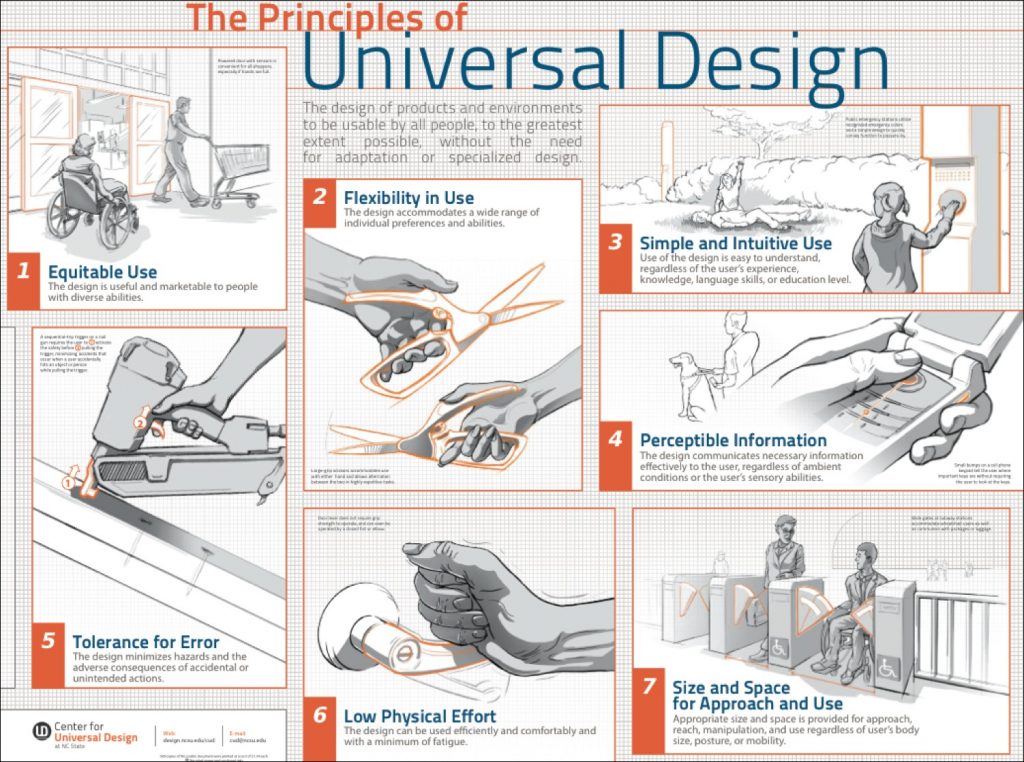
The principles of universal design: equitable use, flexibility in use, simple and intuitive use, perceptible information, tolerance for error, low physical effort, size and space for approach and use. From the Interaction Design Foundation.
Related termsInclusive